Friday, February 12, 2021

Featuring -

TWO for ONE by Emma Lane

The Digital Artist Pixabay.com
I confess I am a Gemini. That means I do not apologize for having two personalities, two serious interests and two distinct pen names. As Emma Lane (Historicals) or Janis Lane (Cozy Mysteries) I spin tales at my computer happily imagining characters and plots. I enjoy the interaction of readers and writers on-line forming firm friendships that endure. It’s a perfect way to spend short winter days and early evenings.

Ah! But in the mellow bath of the Spring sun, I emerge much like a daffodil and bloom with my favorite plants and gardens. March finds me in the greenhouses coaxing tiny plants to their full potential while the maple trees give up their sap for delicate syrup. May finds me happily breathing the fragrance of perky pansies.

June, ah, June. Who doesn’t love June with a surfeit of bouquets for the picking? July is for the necessary communication with the weeds, August is Sunflowers and September is a rainbow of mums. Late into Fall, we glory in the astounding blaze of fire from the trees. Never is the color blue so well represented as by the intensity of a cloudless Fall sky.

Winter approaches, plots have now inched forward; an interesting character speaks from the corners of my mind (that muse again!). A new story is born to share with readers.

I love to chat books, reading, or characters with my friends and colleagues both on line and off. Alternately I am eager and available for discussions regarding plants and gardening in all its forms. Is it Emma already enmeshed into 1800th century storytelling, or has Janis toddled off with Detective Fowler to solve a crime in peaceful Hubbard, NY?

Here's a teaser from one of my Regency books.

What happens when a strong heroine meets an arrogant, but handsome hero? Sparks fly. It's a Regency Romance Romp!

Miss Amabel Hawkins acknowledges her unusual upbringing, but she thinks James Langley, the Duke of Westerton, might be a tad unbalanced when he protests her efforts to right his badly managed properties. The duke, who has been away on the king's business, demonstrates no respect for the beautiful but managing Miss Hawkins. Amabel has taken refuge at Westerton, fleeing from a forced marriage to a man who claims to be her relative in order to gain control of her young brother's estate.

The Duke arrives home to find his estate under the firm control of a beautiful but managing female. His suspicions are fueled by his recent task of spy-hunting and he wonders if Amabel Hawkins is just who she seems. While a dastardly spy lurks, a wicked man poses as her cousin threatening to take over the guardianship of her young brother. Amabel might be falling in love, but she knows for certain the duke would never approve of a meddlesome woman, and she decides to flee his estate. Will the duke finally realize the true value of the woman he loves or will his prejudice ruin his chances forever?
Amazon Buy Link

And a little from my cozy mystery.


Detective Kevin Fowler is baffled by the wall of silence that greets him from the relatives of two septuagenarians whose bodies are discovered in a country cemetery called Blake Hill. Even more upsetting is the unusual rash of vandalism reported nightly by the citizens in his peaceful community. Have the teenagers declared an uprising? Night patrols reveal a totally unexpected and shocking situation. When a poignant secret is revealed, Beverly Hampton weeps over the sadness of a long ago tragedy, but soon wedding bells are heard for the home town princess and the popular detective. At the local diner the alluring fragrance of fresh-baked, cinnamon sticky buns continues to reign over the peaceful citizens of Hubbard, New York.


Emma Lane enjoys leaving her garden for a few hours to dip into the romance genre Regency era of history. Join her for a glimpse of a half selkie fairy as she teases a powerful duke and fights the curse of a lowly, evil warlock. Other Regency romances are available on Amazon and Wild Rose Press. As Janis Lane she writes a series of Cozy Mysteries for Soul Mate Publishing.

Look for information about writing and plants on her new website. Leave a comment or a gardening question and put a smile on Emma's face.

Stay connected to Emma on Facebook and Twitter.


Friday, February 5, 2021

Creating A Backstory

Writing the Back-story for Troubled Characters from Eris Field

Photo Courtesy of geralt pixabay.com


In reality, psychiatric disorders are similar to physical disorders in that they have predisposing factors (risk factors), protective or buffering factors, and an impact on the family as well as the patient.

Recently, I’ve been reading novels that include a family member developing early onset dementia (onset before the age of 60 years) and the necessity of one of the characters (usually the son or daughter) to take over the care. The information seems to be plunked down with no description of possible risk factors—certainly a big cause of fear for every other family member—and little description of the effect on the person’s life and on the caregiver. Just think of someone younger than 60 years. An energetic time for most and certainly too young for retirement. They’ve got things to do and places to go. The person’s children are in their 30’s and there are probably young grandchildren.

As a retired psychiatric nurse I turn the pages frantically looking for the writer to provide more information about the afflicted member and the impact on the family member assuming the caregiver role.

It occurred to me that readers want to know and writers need to address three vital questions:

1. What are the predisposing factors? What in the character’s backstory might have contributed to his developing the illness? Do I have those risk factors?
2. What are the protective factors? Family members wonder what can I do to avoid the same illness?
3. What is the effect of the illness? What would the effect be on me: my career, my savings for the future, my children’s educational funds, my marriage, and my plans for retirement.

In writing about early onset or late onset dementia, it should be remembered that it is a gradual process. Mild cognitive impairment is believed to be a preclinical phase of dementia. People with mild cognitive impairment have impaired memory for recent events but they also frequently have apathy, depression, irritability, and anxiety. They may appear to be agitated without cause. The onset of mild cognitive impairment may be followed by dementia, often within three to five years.
Predisposing factors for developing mild cognitive impairment include:
• Lower level of education
• Fewer stimulating mental activities
• Less physical exercise

Protective factors include:
• Higher level of education achieved
• Being employed or volunteering
• Engaging in physical exercise
• Maintaining good health
• Having an active social support network
• Not smoking
• Having one glass of alcohol a day

Effect on Others
Family members often notice that the person has difficulty remembering future commitments and the family begins to compensate for person’s inability to remember things.

Dementia is an impairment of cognitive functioning—thinking, reasoning, knowing, and memory-- that is severe enough to cause problems with communicating, self-care, and functioning at work, within the family, and within social situations.

Predisposing factors for dementia that occur in middle age:
• History of trauma to the head: repeated injuries to the head, concussions
• Hypertension
• Diabetes
• Obesity
• Cigarette smoking
• Physical inactivity
• High cholesterol,
• Depression
Protective factors for dementia that occur in middle age
• High levels of academic achievement
• Mediterranean diet
• Engaging in intellectually challenging activities
• Engaging in physical exercise
• Moderate use of alcohol (one glass a day)

Predisposing factors for dementia that occur at old age
• Stress
• Cigarette smoking
• Depression
• Head injuries, especially head injuries from falls
• Social isolation and loneliness
• Medications with anticholinergic effects

Protective factors for dementia that occur at old age
• Following a Mediterranean diet
• Drinking wine daily in moderation (one glass)
• Maintaining physical activity
• Engaging in cognitively stimulating activities
• Engaging in leisure activities: music, walking, visiting friends, reading, volunteering, playing games with friends
• Maintaining social networks
• Spirituality

Effect of dementia on others
Grief over the loss of a partner, a relationship, and a shared dream of the future,
Guilt over losing patience with the person with dementia.
Guilt for not being able to keep promise to care for them at home,
Anger over changes, financial burden, and lost opportunities associated with caring for the ill person.
Fear of being at increased risk of developing dementia, and
Fear that dementia in the family may jeopardize chances of marriage for younger family members.

Writers often hint at a genetic influence as the cause of the development of dementia, but if they would include the presence of other risk factors or absence of protective factors in the back stories of their troubled characters and would describe broader effects on the caregiver, their stories would be richer, more compelling.

Here is a brief intro to one of my romance novels that deals with some of these issues. I hope you enjoy it.


At some time in our lives, many of us will be refugees--people fleeing from traumatic situations such wars, earthquakes, fires, floods, or the aftermath of debilitating illness, death, divorce or betrayal. Help for some may come from family members, friends, and spiritual leaders. Within the medical profession, it is often psychiatrists who help those who have been traumatized by such events. No Greater Love is a contemporary, international romance featuring a psychiatrist and a nurse who help those who are refugees only to discover that they are the only ones who can save each other. The story moves from East Aurora in Western New York to Leiden and Amsterdam in The Netherlands.

Descended from legendary Circassian beauties once sought for Sultans’ palaces, Janan, a survivor of an earthquake in Turkey that killed her family when she was eight years old, was adopted by an older, childless couple in East Aurora. Her adoptive father was raised with a cousin, Carl, who, in 1939 at the age of 5, had been sent from his home in Leiden by his Dutch-Jewish father to his uncle in the US to save him from Nazi occupation of The Netherlands. Now, 28 years old, Janan has spent her life working as a nurse, caring for her parents, and, after their deaths, helping the aging Carl.

When Pieter, a young Dutch psychiatrist who Carl mentored, comes to Buffalo to be evaluated at Roswell Park Cancer Institute, he meets Janan and knows the sweet power of love for the first time. He also knows that, even if he lives, treatment for leukemia may leave a man unable to father children.

Realizing she has fallen in love with Pieter and fearing that life is passing her by, Janan asks him for one night. During that one night, cloistered in Room 203 of the venerable Roycroft Inn, Pieter teaches Janan the eight different kisses of seduction. It is a night that changes the lives of all.

Buy Links Kindle - Paperback

Eris Field was born in the Green Mountains of Vermont—Jericho, Vermont to be precise—close by the home of Wilson Bentley (aka Snowflake Bentley), the first person in the world to photograph snowflakes. She learned from her Vermont neighbors that pursuit of one’s dream is a worthwhile life goal.

As an impoverished student nurse at Albany Hospital, Eris met her future husband, an equally impoverished Turkish surgical intern who told her fascinating stories about the history of Turkey, the loss of the Ottoman Empire, and the painful experience of forced population exchanges.

After years of working as a nurse, teaching psychiatric nursing, and raising a family, Eris now writes novels--international, contemporary romances that incorporate her interest in psychiatry, history, people from different cultures, and the problems of refugees.

Although the characters in Eris’s novels are often from other countries—The Netherlands, Turkey, and Kurdistan— her novels are usually set in Western New York--The land of Father Baker, Jericho Road Refugee Center, the Buffalo Bills, Wings, and snow--chunky rain snow, lake-effect snow, horizontal snow, the snow of thunder snow storms, dry, fine snow, curtains of wet heavy snow, and whiteouts.

Learn more about Eris Field on her website. Stay connected on Facebook.


Tuesday, January 26, 2021

FEATURING:

COLLABORATIVE WRITING How and Why it Works for Us
by C.D. Hersh


Lots of people we know look at us as collaborative writers and say, “I don’t know how you two do it. I’d kill my spouse if I had to work with him/her.”

Well, we’re both still alive and healthy and love working together.

So what’s our secret? For the inquisitive minds who want to know, here are a few reasons why our writing partnership works.


  • We like each other and respect each other—a lot. Respect is paramount in any working relationship.
  • We’ve been together more years that we’ve been apart. As a result, we know each other very well.
  • We have complimentary talents and we recognize that. Donald is a great idea and plotting person, and Catherine is good at the technical part of writing, the grammar, spelling, punctuation, and etcetera.
  • We laugh a lot when we’re working together, even if it’s a serious scene. Nothing brings people together like laughter.
  • We plot our stories in detail, but still allow room for the characters to take us to unexpected places. When they do what we haven’t planned, both of us have to sign off on what has happened before it makes it into the book.
  • We’re willing to throw ideas, scenes and whole sections of each other’s writing out. There are no sacred cows in our partnership.
  • Our methods of collaborative writing are fluid. Sometimes we create using a totally collaborative effort, literally writing together line-by-line (we’ve created a number of our plays using this method). We might revamp something one of us has created as a solo writer, or we might work with one of us functioning as the major writer and the other as editor. Changing things keeps our interests up and our egos in check.
  • And last, but certainly not least, we keep the lines of communication open. Writing is usually a solo job, but when you’re working with someone else, you have to let them know how you feel about what’s being plotted, written, and critiqued. If you don’t, then you can stifle the creative flow as well as the collaborative relationship. When we plot and one of us throws out a hasty, “I hate that idea!” (and we’ve done that) there are no hurt feelings on the part of the other person. We will ask for clarification as to why, and the protesting party must come up with a reasonable excuse, but we never get upset, want to quit working together, or get a divorce over it.

We can’t speak to the writing methods of other co-authors, although we have read that some write opposing chapters or each take a point of view, something we haven’t tried yet. However, as a married couple and co-authors, we do feel we bring something unique to the table—a spark we hope will take us a long way on our writing journey. A spark that enriches our personal relationship. For us, that’s enough reason to work together as C.D. Hersh.

Have you ever co-authored something? What worked for you in that relationship?

Following is a sample of our collaborative writing. An excerpt from The Promised One, the first book in our Turning Stone Chronicles Series.


The woman stared at him, blood seeping from the corner of her mouth. “Return the ring, or you’ll be sorry.”

With a short laugh he stood. “Big words for someone bleeding to death.” After dropping the ring into his pocket, he gathered the scattered contents of her purse, and started to leave.

“Wait.” The words sounded thick and slurred . . . two octaves deeper . . . with a Scottish lilt.

Shaw frowned and spun back toward her. The pounding in his chest increased. On the ground, where the woman had fallen, lay a man.

He wore the same slinky blue dress she had—the seams ripped, the dress top collapsed over hard chest muscles, instead of smoothed over soft, rounded curves. The hem skimmed across a pair of hairy, thick thighs. Muscled male thighs. Spiked heels hung at an odd angle, toes jutting through the shoe straps. The same shoes she’d been wearing.

The alley tipped. Shaw leaned against the dumpster to steady himself. He shook his head to clear the vision, then slowly moved his gaze over the body.

A pair of steel-blue eyes stared out of a chiseled face edged with a trim salt-and-pepper beard. Shaw whirled around scanning the alley.

Where was the woman? And who the hell was this guy?

Terrified, Shaw fled.

The dying man called out, “You’re cursed. Forever.”


Amazon buy links:
The Turning Stone Chronicles Series page

The Promised One (The Turning Stone Chronicles Book 1)

Blood Brothers (The Turning Stone Chronicles Book 2)

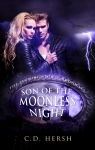
Son of the Moonless Night (The Turning Stone Chronicles Book 3)


The Mercenary and the Shifters (The Turning Stone Chronicles Book 4)


C.D. Hersh–Two hearts creating everlasting love stories.
Putting words and stories on paper is second nature to co-authors C.D. Hersh. They’ve written separately since they were teenagers and discovered their unique, collaborative abilities in the mid-90s. As high school sweethearts and husband and wife, Catherine and Donald believe in true love and happily ever after.

They have a short Christmas story, Kissing Santa, in a Christmas anthology titled Sizzle in the Snow: Soul Mate Christmas Collection, with seven other authors.

They are looking forward to many years of co-authoring and book sales, and a lifetime of happily-ever-after endings on the page and in real life.

Social Media Info:

p> 

Friday, January 22, 2021

FEATURING:

One Step Nearer the Epilogue

from Carol Browne

Photo by Gaelle Marcel on Unsplash
The metaphor that likens life to a book is a common one. Viewing our progress through existence as a series of chapters appeals to our need to put things in boxes and compartments. Each chapter can be titled after a significant event or rite of passage: infancy; puberty; marriage; first job; and so on. There is no set number of chapters and each one may have different themes and moods. The length of each chapter is as variable as the length of the entire book; it is, however, generally assumed that a valuable lesson or learning experience should be included in the narrative.

The latest chapter in my own book of life is the one headed ‘Retirement’. I have longed to reach this chapter but I am fully aware of the potential dangers that lie within its pages.  For many, retirement is the end of usefulness when we become a drain on society and not a contributor anymore. It can make us feel less important and rob us of our self-respect and purpose. We tell ourselves that we have nothing to look forward to but an eventual decline into infirmity. But, as with all previous chapters, we have a choice in how we approach this new status. It’s all a question of attitude.

We can embrace our new freedom because we have earned it, and we don’t have to let ourselves go or stop learning. We can still work if we want to, but now we can choose what work we do, and when. Retirement doesn’t have to mean bingo and chamber music, complaining about the younger generation, or behaving with dignity at all times. The contribution of the elders to society should be enormous because finally we have the time and financial freedom we need to change the world. It’s not just by doing voluntary work or becoming politically active. We are now more useful than ever before because we have a lifetime of knowledge and experience and we can use that to guide those who are still struggling through earlier chapters. I would encourage all my fellow oldsters to reject the idea that they are on the scrapheap, because the fun is only just beginning.

I’m hoping ‘the undiscover’d country’ is some way off for me yet, but when they come to write my epilogue I hope it will show me in a favourable light. I hope it will include my successes as well as my failures. I would like to think I had made a difference to the world and left it in a better condition than I found it, even if it’s in a small way. I have plans for this particular learning experience and trust that the epilogue will celebrate my success. Most importantly of all, once my book is finished, I hope those I leave behind me will give it a five-star review.

Just to prove to you sitting in a rocker all day is not in my future, here's a peek at my latest epic fantasy. I hope you enjoy it.


His adventures in Elvendom left Godwin a changed man, and now bereavement has darkened his world.

In another dimension, a new Elvendom is threatened by the ambitions of a monstrous enemy. But who - or what - is the Dark Lady of Bletchberm?

And what has become of Elgiva?

Reeling from the loss of their Elwardain, the elves ask Godwin for help.
Transported into a strange world of time travel and outlandish creatures, will he succeed in his quest against impossible odds, or will the Dark Lady destroy everything the Elwardain fought to preserve?


EXCERPT

His heart thumping in his throat, Godwin took in all the details of the goblin’s appearance. The creature was probably four feet tall at most and was wearing a sleeveless leather tunic and short leggings over his skinny frame. His arms and legs were hard with thin bands of muscle; sinews moved like taut wires beneath the scant flesh. Godwin fancied that the goblin’s skin had a sickly, greenish tint, but in the firelight it was impossible to be sure.

The goblin moved in an awkward manner, not upright like a man or an elf, but slightly stooped and with bent knees, as though on the verge of pouncing. The dome of his head was as bald and smooth as a pebble, and his very long, pointed ears were attached on either side like those of a lynx. His large eyes glittered like wet malachite and between them a long, sharp nose protruded with all the aesthetic attributes of a small parsnip.

The goblin’s large eyes widened as they swivelled in Godwin’s direction, making his stomach curdle in fear and revulsion.

“Only two of you, then?” said the goblin with a smirk. “Not much of a challenge, is it?” He beckoned with his sword and others of his kind began to creep into the circle.

Godwin glanced around. There were six more of them, each carrying a sword of a curious design, the blade like a thin, metal spiral with a very sharp point. A visceral fear welled up inside him at the sight of these weapons, but he didn’t know why.

Amazon Buy Links USA - UK

Born in Stafford in the UK, Carol Browne was raised in Crewe, Cheshire, which she thinks of as her home town. Interested in reading and writing at an early age, Carol pursued her passions at Nottingham University and was awarded an honours degree in English Language and Literature. Now living and working in the Cambridgeshire countryside, Carol usually writes fiction but has also taken a plunge into non-fiction with Being Krystyna. This story of a Holocaust survivor has been well received.

Stay connected with Carol on her website and blog, Facebook, and Twitter.


Tuesday, January 19, 2021

Auditioning 101

MAMMA MIA!

 I was so out of my league!

from Anne Montgomery 

Sometimes we do things that, as Forrest Gump would say, "Just don't make no sense."

 And I am guilty of such an act, mostly because I ignored the numbers and severely overestimated my abilities.

 I have written about the fact that I performed in a community theater production of the musical Company in the past. Though it was initially terrifying, in the end I made friends and had fun. So, it seemed rational that I give it another try. Mamma Mia was coming up and I wanted to give it a shot.

 I started singing along to the Mamma Mia CD in my car in February.  I thought I was ready. Even the cast descriptions didn't deter me. Though, admittedly, the fact that the "elder" female characters were listed as "late 30s-early 50s" should have tickled my spidey senses.

 This time around, auditions were very different. Four times the number of actors showed up. And there was improv involved. Still, I thought I had a shot at making the cast, until I arrived at the dance callbacks.

 My first clue should have been the young lady spread-eagled flat on the floor, stretching in preparation. In fact, the stage was littered with bodies of those limbering up. I was a tad bemused, as I had seen the movie and didn’t notice too much complicated-looking dancing, at least not from the named characters. Had I considered that the stage version might be vastly different from the one with Meryl Streep and her pals, I might have been forewarned.

Those hoping for a spot in the cast filled the stage facing a thin, twenty-something with a high, tawny pony tail and black leggings. She announced that we would be learning a series of dance steps.

 “OK! Face the back," she said, reminiscent of a drill instructor. " Now, hips left, then right, and spin to the front. And … right arm up high. Good. Now side step. And back. Other side. Full turn to the left and drop to your knees.”

My head popped up. Drop to my knees? Did she mean the ones that have functioned for the last 15 years thanks to the miracle of modern science, infusions injected with big-ass needles that always make me wince? Those knees?

Not wanting to stand out, I dropped to the floor. I almost bellowed like a moose giving birth, but managed to stop myself.

“Now roll over on your butt and jump up.”

In my case, said roll did not occur. I just stared at the choreographer.

“Now … leap!” She took to the air.

Leap? The thing about leaping is there always tend to be landings involved.

The choreographer encouraged us to leap in this fashion. Don't you agree it hurts just to look at this picture?

“Those of you who want to can bend your leg while leaping. Like this.” She launched herself skyward again. “Point your toes,” she said, alighting gracefully. “Second line, move up to the front.”

Hoping no one would notice, I melted into the back, which would be my primary strategy throughout the ordeal.

After an hour, we took a break. To my horror, five minutes later we were at it again.

“Let’s do another one,” she said. “This one will be easy. Even I can do it.” She smiled prettily.

What I wanted most was to go all Tonya Harding on her kneecaps. “See what you feel like when you’re over 60,” I muttered under my breath, as I mounted the stage.

Another hour passed. I longed for my chiropractor.

I know what your thinking. Why didn’t I just go sit down? Pride, I suppose. Or maybe just plain stubbornness. A few other older women had taken seats. I say “older” here with a caveat. If I had to guess, with the exception of my friend Scott, there was probably no one over 50 auditioning. Clearly, I was pretty much alone as a mid-sexagenarian.

Mercifully, the dancing finally ended. But my humiliation was not over.

Scott appeared. “Hey! You need to go in the back.”

I heard women’s voices singing Dancing Queen from backstage. “Why?”

“The mothers are auditioning,” he explained, using the term applied to the older adult women trying out for a part.

Not knowing how I could have missed the others being called away, I leapt – OK, in my mind, I leapt – onto the stage and bolted through a curtain and down a ramp toward the piano, where about eight women were lined up single file.

“I am so sorry I’m late!” I shouted.

All heads turned toward me. A woman looked up, paper and pencil in hand. “Your name?”

“Anne.”

She scrutinized the document.

The director rose from his seat.

“You’re not on the list,” he said. “You were called back only for a dancing part.”

I suddenly realized that if getting a part hinged on my dancing skills, I would need other plans for the summer. “I am … so sorry!”

I fled.

I found Scott in the seats and chastised him. It wasn’t his fault, though. He simply assumed I should be back there with the others, which in retrospect was sweet.

The director soon dismissed those of us who wouldn’t be invited to participate in any further auditions. Totally dejected, I sneaked out the back door.

When I got home, my sweetie pie stared at me. “I’m sorry,” he said without asking what happened.

I wondered if he’d had a premonition, since he already had a glass of wine poured and waiting for me.

“Maybe they did you a favor,” he said a short time later, as I sat in my jammies feeling sorry for myself, rubbing my aching knees.

I sipped my wine and pouted. “Maybe.”

Later that night, wrapped in two cold packs and a heating pad, I licked my wounds and considered whether I would ever try out for another play.

I'm thinking about it. I'll let you know.

Here's a little from my suspense novel based on a true incident. I hope it intrigues you.


As a Vietnam veteran and former Special Forces sniper descends into the throes of mental illness, he latches onto a lonely pregnant teenager and a group of Pentecostal zealots – the Children of Light – who have been waiting over thirty years in the Arizona desert for Armageddon.

When the Amtrak Sunset Limited, a passenger train en route to Los Angeles, is derailed in their midst in a deadly act of sabotage, their lives are thrown into turmoil. As the search for the saboteurs heats up, the authorities uncover more questions than answers.

And then the girl vanishes.

While the sniper struggles to maintain his sanity, a child is about to be born deep in the wilderness.

BUY LINKS

Anne Montgomery has worked as a television sportscaster, newspaper and magazine writer, teacher, amateur baseball umpire, and high school football referee. She worked at WRBL‐TV in Columbus, Georgia, WROC‐TV in Rochester, New York, KTSP‐TV in Phoenix, Arizona, ESPN in Bristol, Connecticut, where she anchored the Emmy and ACE award‐winning SportsCenter, and ASPN-TV as the studio host for the NBA’s Phoenix Suns. Montgomery has been a freelance and staff writer for six publications, writing sports, features, movie reviews, and archeological pieces.

When she can, Anne indulges in her passions: rock collecting, scuba diving, football refereeing, and playing her guitar.

Learn more about Anne Montgomery on her website and Wikipedia. Stay connected on Facebook, Linkedin, and Twitter.


Tuesday, January 5, 2021

An Italian Favorite

from Sharon Ledwith

Picture this – savory, sautéed chicken cooked in a cheesy, creamy sauce with Roma tomatoes, served atop a bed of fettuccini pasta. Is your mouth watering yet? Mine is. One of my go-to meals I order at a restaurant includes this classic pasta dish. So, I thought I’d bring this Italian favorite from the restaurant into your kitchen to enjoy with 8 of your family or friends wherever and whenever you choose to get-together. 

 With a prep time of 30 minutes, and a cook time of 30 minutes, you can divvy up the duties and make it a culinary collaboration. Wine, of course, is optional, but encouraged.

Classic Chicken Fettuccini Alfredo

6 skinless, boneless chicken breasts halves, cut into cubes

6 tbsp. butter, divided

4 cloves garlic, minced, divided

1 tbsp. Italian seasoning

1 lb. (454 g) fettuccini pasta

1 onion, diced

1 – 8 oz. (227 g) package sliced mushrooms

⅓ cup all-purpose flour

1 tbsp. salt

¾ tsp. ground white pepper

3 cups milk

1 cup half-and-half 

¾ cup grated Parmesan cheese

8 ozs. (227 g) shredded Colby-Monterey Jack cheese

3 Roma (plum) tomatoes, diced

½ cup sour cream

In a large skillet set over medium heat combine chicken, 2 tablespoons butter, 2 cloves garlic, and Italian seasoning. Cook until chicken is no longer pink inside. Remove from skillet and set aside.

Bring a large pot of lightly salted water to a boil. Add pasta and cook for 8 to 10 minutes or until al dente; drain.

Meanwhile, melt remaining butter in the skillet. Sauté onion, remaining garlic, and mushrooms until onions are transparent. Stir in flour, salt, and pepper; cook 2 minutes. Slowly add milk and half-and-half, stirring until smooth and creamy. Blend in Parmesan and Colby-Monterey Jack cheeses. Continue to stir until cheese is melted. Stir in chicken mixture, tomatoes, and sour cream. Serve over cooked fettuccini.

IF by any chance you have leftovers, the Alfredo mixture freezes well.

Has all this cooking made you ‘stir’ crazy? After your guest have departed, may I suggest settling in with a good book and a glass of wine? How about a visit to Fairy Falls, or if you’re feeling really adventurous, a trip back in time with The Last Timekeepers? Whichever you choose, I guarantee either series will take you on a journey far away from dirty dishes and messy pots. 

Here's a glimpse into one of the books from Mysterious Tales from Fairy Falls, my teen psychic mystery series.

 
The only witness left to testify against an unsolved crime in Fairy Falls isn’t a person… 

City born and bred, Hart Stewart possesses the gift of psychometry—the psychic ability to discover facts about an event or person by touching inanimate objects associated with them. Since his mother’s death, seventeen-year-old Hart has endured homelessness, and has learned ways to keep his illiteracy under wraps. He eventually learns of a great-aunt living in Fairy Falls, and decides to leave the only life he’s ever known for an uncertain future. 

Diana MacGregor lives in Fairy Falls. Her mother was a victim of a senseless murder. Only Diana’s unanswered questions and her grief keeps her going, until Hart finds her mother’s lost ring and becomes a witness to her murder.

Through Hart’s psychic power, Diana gains hope for justice. Their investigation leads them into the corrupt world threatening Fairy Falls. To secure the town’s future, Hart and Diana must join forces to uncover the shocking truth, or they risk losing the true essence of Fairy Falls forever.


Sharon Ledwith is the author of the middle-grade/YA time travel series, THE LAST TIMEKEEPERS, and the teen psychic mystery series, MYSTERIOUS TALES FROM FAIRY FALLS

When not writing, researching, or revising, she enjoys reading, exercising, anything arcane, and an occasional dram of scotch. Sharon lives a serene, yet busy life in a southern tourist region of Ontario, Canada, with her hubby, one spoiled yellow Labrador and a moody calico cat.

Learn more about Sharon Ledwith on her website and blog. Stay connected on Facebook and Twitter, Google+, Goodreads, and Smashwords. Look up her Amazon Author page for a list of current books. Be sure to check out THE LAST TIMEKEEPERS TIME TRAVEL SERIES Facebook page.


Tuesday, December 29, 2020

Hearing Differences

DO YOU HEAR WHAT I HEAR?

from Catherine Castle 

The other morning while having breakfast my husband said, “Listen. Do you hear that?” 

"What?” I asked. 

“That whoosha whoosha sound.” 

I listened intently. “Nope. All I hear is the ticka ticka ticka of the refrigerator in its thaw cycle.” 

“No,” he replied. “It’s definitely a whoosha whoosha.” 

I cocked my head toward the fridge. “No it’s ticka ticka.” 

“Wait,” he said. “It’s changed. It’s now zzz zzz zzz, like the vibrating sound my toy football players used to make on their metal field. 

“That’s more of a rooma rooma rooma noise.” I replied. 

“No. It’s zzz zzz zzz,” he insisted. 

Breakfast was on hold and the cereal got soggy in our bowls as we argued back and forth while the sounds of the thawing cycle of the fridge changed every few minutes. Neither of us heard what the other heard. Finally, the debate ended with a ka-thunk at the end of the defrost cycle. Silence filled the kitchen. 

“I don’t hear anything now.” I spooned up a serving of mushy bran cereal, anxious to get back to my breakfast before it dissolved any more. 

Tick tock tick tock,” hubby said as the Mickey Mouse clock second hand rounded the clock face. 

“I hear that,” I said. It was the only sound we agreed on, and it’s one that is universally known to represent a clock. 

Now, I know men are from Mars and women are from Venus, and we are different in sooooo many ways. But I always thought hearing was hearing. After all, our ears, male or female, are built the same way. We have the same little ear canals connected to the same parts of the brain. I knew, even when I couldn’t hear the sounds, what the writers meant when Batman and Robin fought the bad guys and cartoon balloons appeared on the television screen screaming BAM! POW! SOCKO! 

 But that morning in the kitchen I had a revelation: I wasn’t to blame when I couldn’t get a mechanic to understand me! All those years I failed to fully communicate with male mechanics wasn’t because I lacked something. 

When my husband describes a funny sound in our car, the mechanics all nod their heads knowingly. But when I describe the odd sounds, the male mechanics look at me like I have two heads. I always wondered why I could never get my point across to them, no matter how many times I repeated the explanation of the sounds. 

Now, I know why. Apparently, men lack the finite hearing of a woman. They don’t hear things right. A rattle rattle, clatter clatter, boom boom boom probably sounds like chicka chicka, sissa sissa, thunk thunk thunk to them. And anyone with a pair of ears can hear that there’s a world of difference between the two sounds. 

Hummm. Maybe I need a female mechanic. She’ll get it. Unlike a guy. 

What about you? Does your man hear the same things you do? And I don’t mean when someone speaks to you. That’s a whole ’nother blog post. 

May your Holidays be happy and bright! 

Catherine

Take your mind off the sound discrepancies between men and women with a copy of Catherine’s award-winning romantic comedy that has a touch of drama. You’ll laugh as Mama searchs for a husband for her daughter. 

One date for every medical test—that’s the deal. Allison, however, gets more than she bargains for. She gets a Groom for Mama.

Beverly Walters is dying, and before she goes she has one wish—to find a groom for her daughter. To get the deed done, Mama enlists the dating service of Jack Somerset, Allison’s former boyfriend.

The last thing corporate-climbing Allison wants is a husband. Furious with Mama’s meddling, and a bit more interested in Jack than she wants to admit, Allison agrees to the scheme as long as Mama promises to search for a cure for her terminal illness.

A cross-country trip from Nevada to Ohio ensues, with a string of disastrous dates along the way, as the trio hunts for treatment and A Groom For Mama.


Amazon Buy Link

Multi-award-winning author Catherine Castle has been writing all her life. A former freelance writer, she has over 600 articles and photographs to her credit (under her real name) in the Christian and secular market. Now she writes sweet and inspirational romance. Her debut inspirational romantic suspense, The Nun and the Narc, from Soul Mate Publishing, has garnered multiple contests finals and wins.

Catherine loves writing, reading, traveling, singing, watching movies, and the theatre. In the winter she loves to quilt and has a lot of UFOs (unfinished objects) in her sewing case. In the summer her favorite place to be is in her garden. She’s passionate about gardening and even won a “Best Hillside Garden” award from the local gardening club.

Learn more about Catherine Castle on her website and blog. Stay connected on Facebook and Twitter. Be sure to check out Catherine’s Amazon author page and her Goodreads page. You can also find Catherine on Stitches Thru Time and the SMP authors blog site.